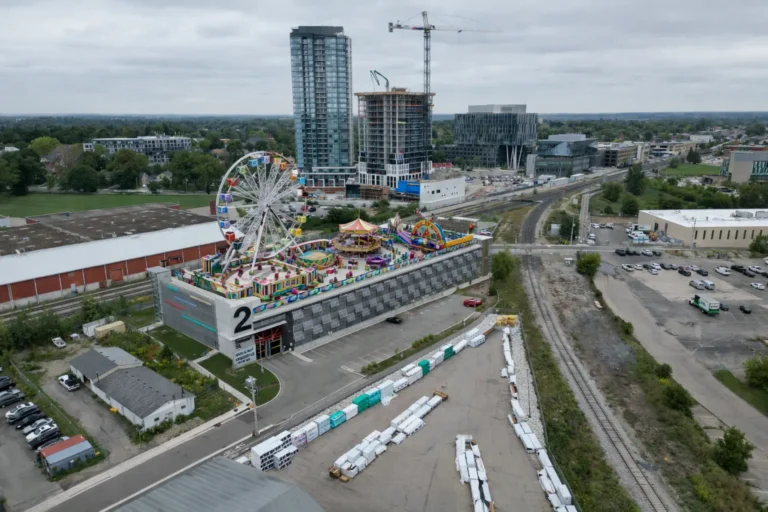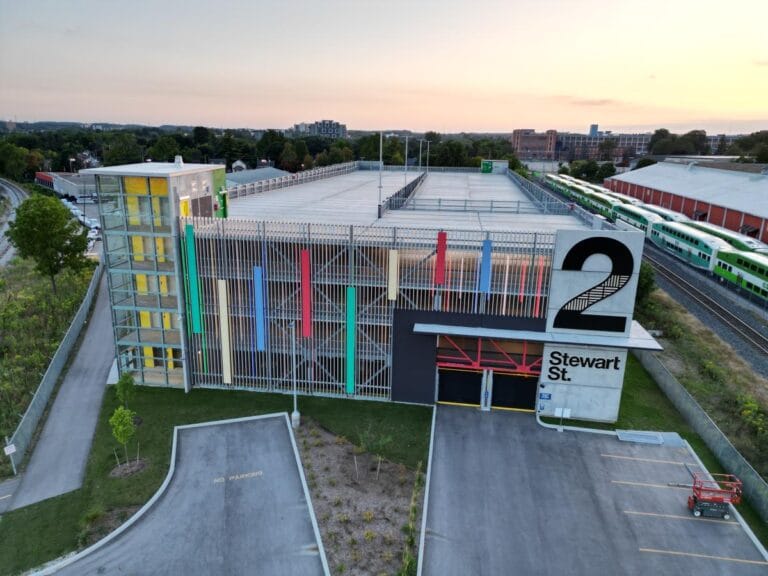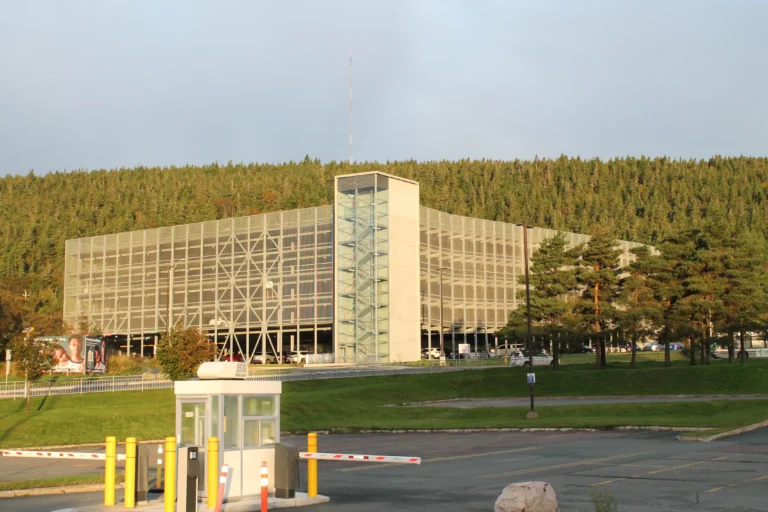

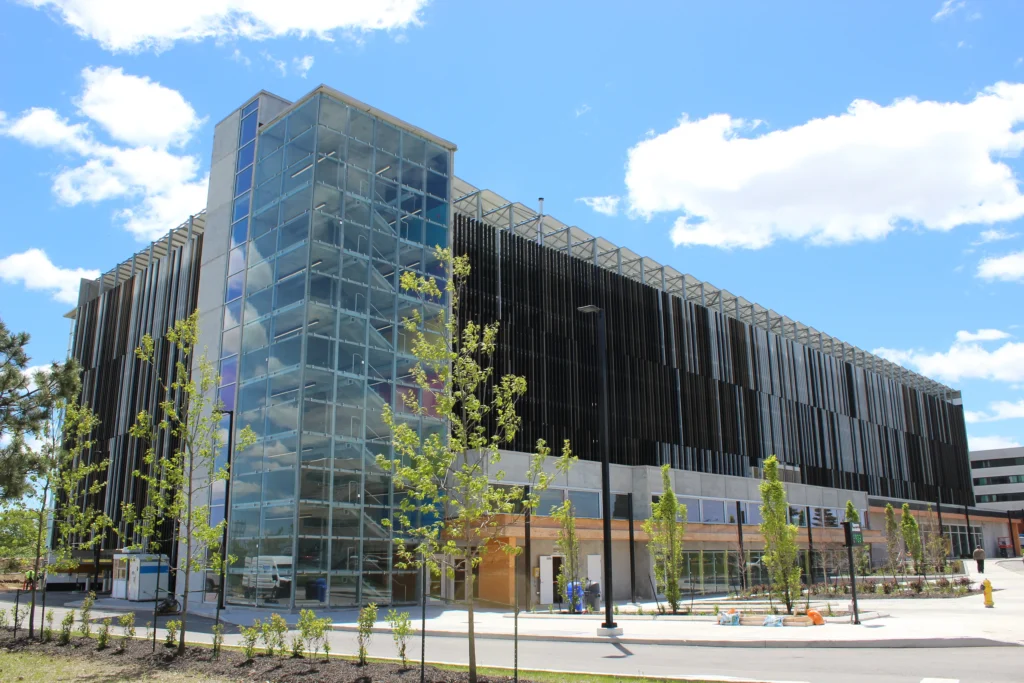
Planning a parking structure seems simple at first. You need a certain number of stalls, you have a budget, and you just want it built. In reality, whether you are developing transit-oriented hubs, expanding healthcare campuses, or managing municipal infrastructure, a few early decisions will determine if your parkade is efficient, easy to use, and cost-effective… or awkward and expensive for decades.
This list walks through the practical insights that urban developers, airport authorities, university planners, and hospital administrators should know before starting institutional or commercial parking structure construction. It is written in plain language, with links to deeper articles on topics like relocatable airport decks and high-turnover commuter parkades.
1. Try to minimize “square footage per parking space”
A simple way to think about parkade efficiency is this:
take your total gross floor area (GFA) and divide it by the number of parking spaces.
GFA ÷ number of stalls = square footage per stall
That number is your cost function. It tells you how much building you are putting around each car.
A few quick rules of thumb:
- Aim for about 300 sq. ft. of GFA per stall.
- If you are up around 350 sq. ft. per stall, the layout is starting to get inefficient.
- If you are closer to 400 sq. ft. per stall, something is probably wrong with the layout.
The cheapest square footage to build is the square footage you do not need to build. Every bit of efficiency you can squeeze out of the plan reduces structure, foundations, cladding, and long term maintenance.
However, not all square footage is useful. The next few points explain why some layouts turn square footage into useful parking, and others do not.
2. Parking structures have ideal dimensions, design within them
The layout of a parking structure really comes down to a few simple numbers.
Your municipality sets most of them for you:
- Parking space width
- Parking space length
- Drive aisle width
Once those are fixed, they control almost everything else.

If you have one drive aisle with parking on both sides, the overall width of that bay is:
2 × parking space length + drive aisle width
The length of the structure is then roughly:
number of parking spaces × parking space width
The exact length is usually less critical than the width, but it is still smart to keep it in clean increments of the parking space width. That way the stalls, columns, and structural grid all line up nicely and you do not end up with half stalls or leftover slivers of space at the ends.
That is why we talk so much about “bays” and repeating patterns. You line up your bays, then set your structural grid to follow the parking layout. Columns land between stalls, not in the middle of them.
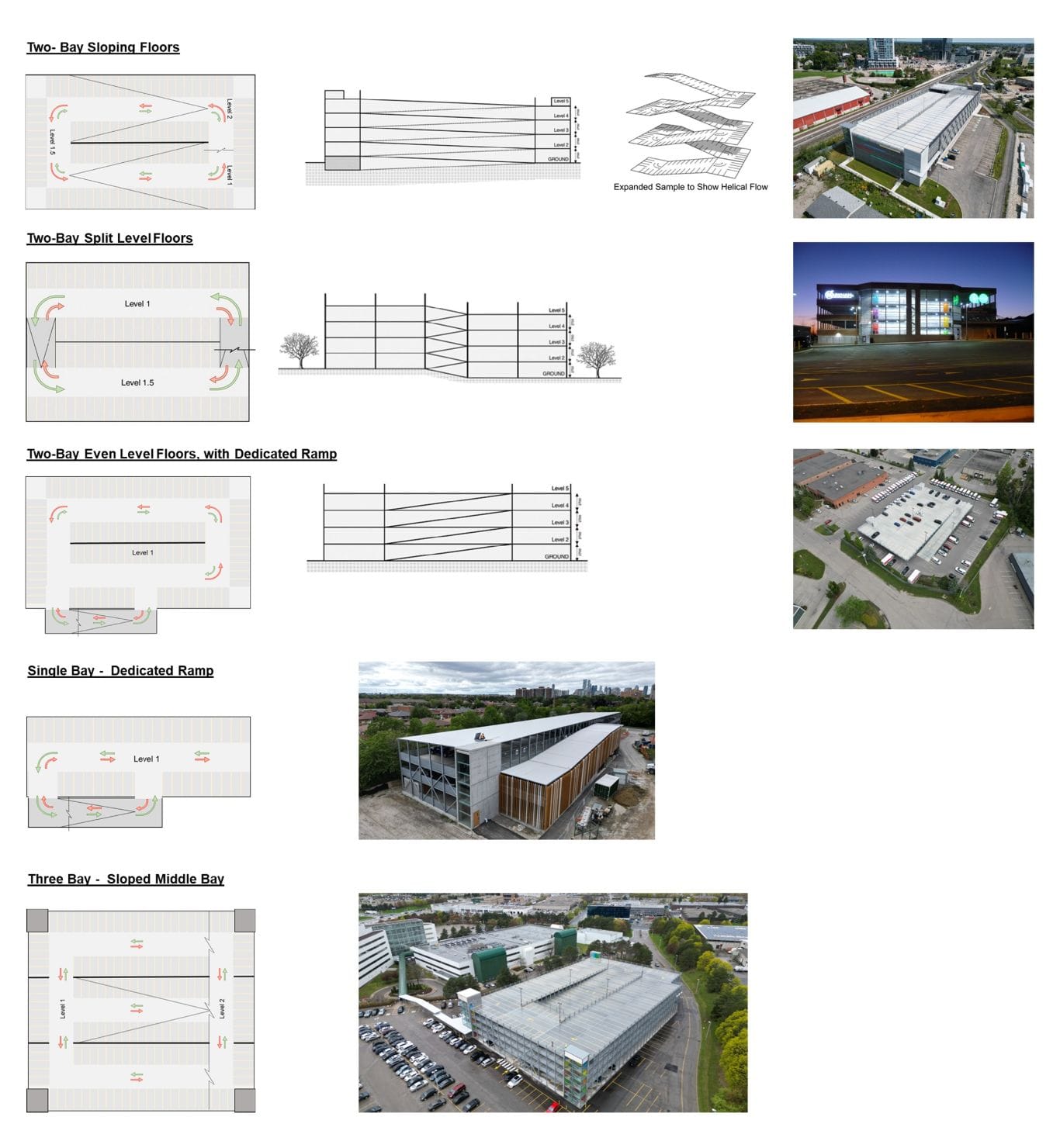
Curves, angles, and quirky shapes usually break that rhythm. They eat up space, reduce the number of stalls you can fit, and push your square footage per stall in the wrong direction. Parking structures are very much form follows function. If you let the parking dimensions lead, the building shape almost designs itself.
3. Design-Build a solid structure, then make it look good
Parking structures are function first.
The cars, stall sizes, drive aisles, and ramps decide what the building wants to look like. When projects get really expensive, it is often because someone tried to force “art” onto a layout that wants to stay simple and regular.
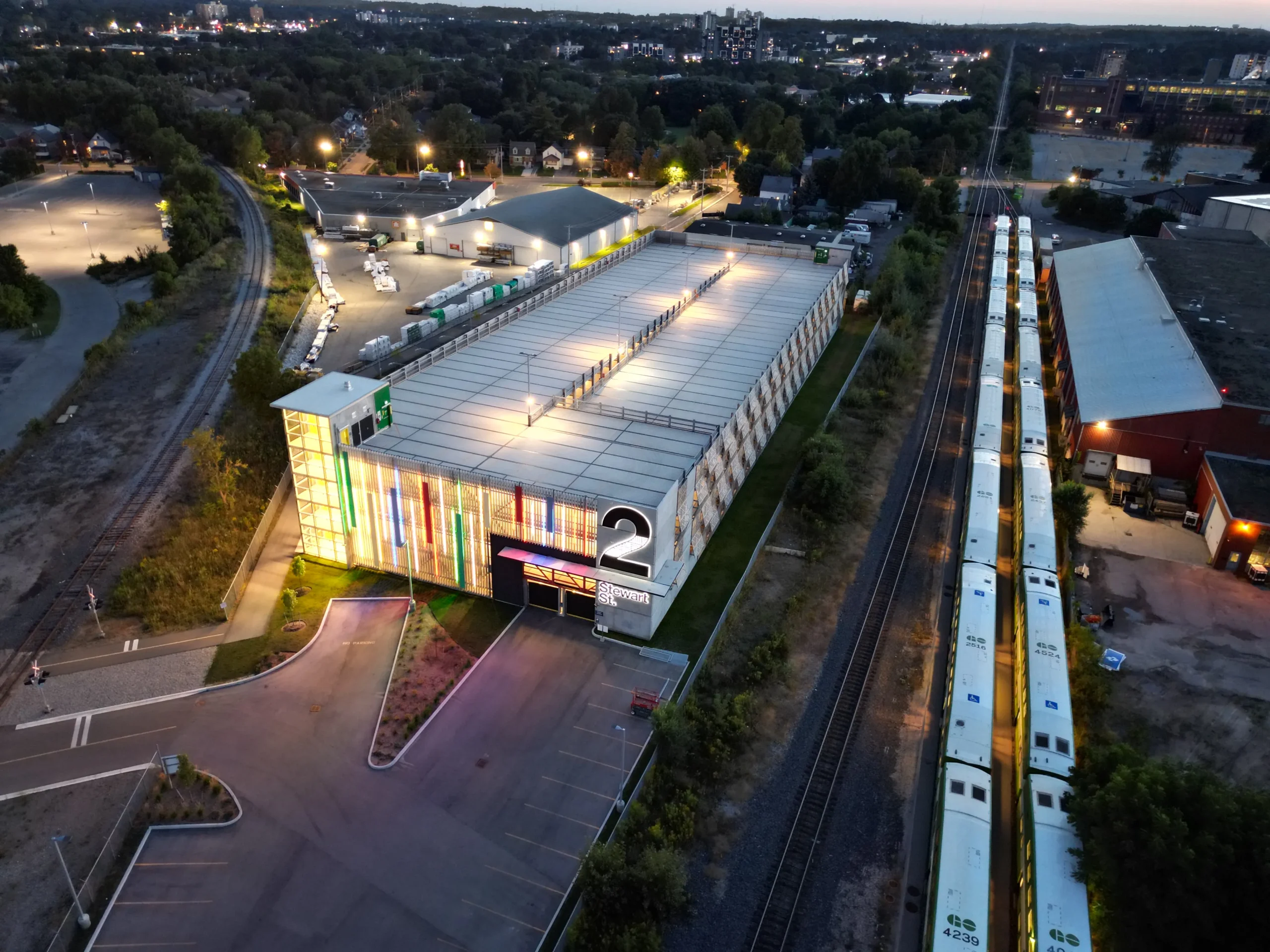
Start with the bones. Pick the right structural system, get the bays and grid working, and make sure the layout hits your efficiency target from Section 1. That is where a design-build approach works well, because the structural and parking layout can be developed together.
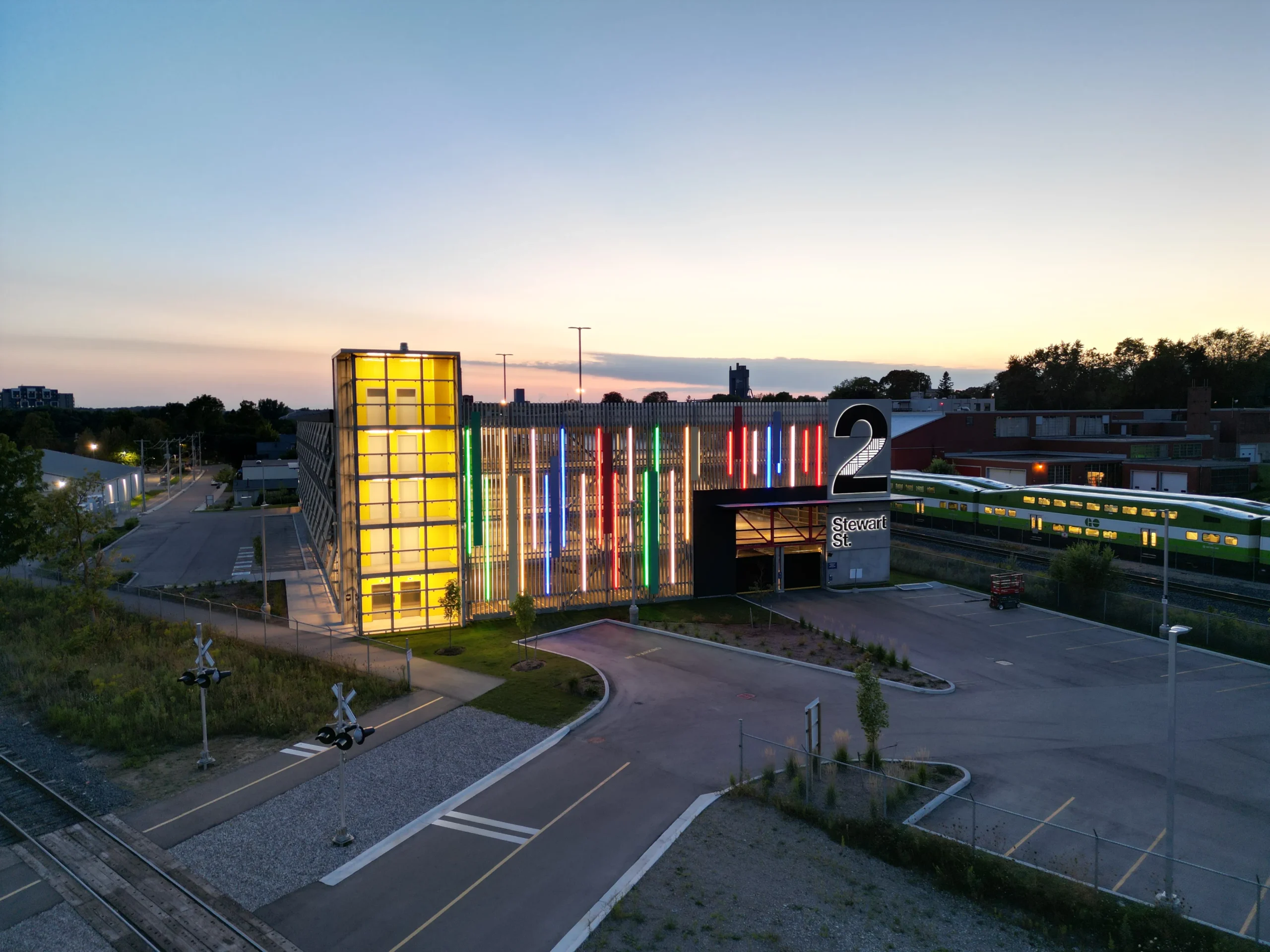
Once the “under the hood” pieces are right, then you can dress it up with parking structure facades. Screens, fins, artwork, or a more polished skin can all be added without breaking the structure or the budget. Too many owners fall in love with the rendering that has the nicest façade, but behind it there is a clumsy layout or poor material choices. It is a bit like buying a Ferrari body with a golf cart engine.
For example, the Joseph Street Parking Structure utilized a UHPC deck and Beam structural system and then had award winning architect Peter Blitstein design the facade and architectural “wow-factor.”

4. Ramping is important, design them efficiently
Every parking structure needs a simple, clear way to move between levels. If people are hunting for the ramp or guessing which way is up, the design missed the mark.
One way to handle ramps is with sloped floors. In this setup, the driving surface is gently sloped (maximum 5%) as you pass rows of stalls. You are effectively “ramping” while you park. This can save a lot of square footage because you are using the same space for both parking and circulation.
Sometimes you see split level structures. These shift up or down by half a level at a time. They can be compact and efficient, but if the layout is not carefully planned, they can feel confusing for first-time users.
You can also use a dedicated speed ramp. This is a ramp that does not park cars on it. It can make sense when you want fast vertical movement, but it eats space. A typical speed ramp might be about 8 metres wide and around 40 metres long once you add landings at the top and bottom. That is a big strip of building that is not parking any vehicles.
On very tight or very large sites, you sometimes see spiral or helical ramps. These can move cars up and down quickly in a compact footprint, but they still take up a lot of structure and need to be integrated carefully so they do not hurt the overall efficiency of the layout.
Good ramp design keeps cars moving, keeps people oriented, and uses as little extra area as possible.



5. Stay above ground if you can. Underground is completely different (and expensive)
Underground parking is not “just another level” below grade. It is a different project. You are now dealing with excavation, shoring, retaining walls, waterproofing, drainage, ventilation, and a structural system that also has to carry the building above.
That alone makes it much more expensive to build and often more expensive to maintain. Below grade structures also come with more unknowns: soil conditions, rock, existing services, and groundwater. If you are below the water table, dewatering can add a lot of cost very quickly.
As a rough range, underground parking often lands around 170 to 350 dollars per square foot. At 300 to 350 square feet per stall, that can mean something like 60,000 to 120,000 dollars per space. The numbers move around based on site conditions, but it is always a big step up from an open air structure.
If you want to dig into the cost side in more detail, have a look at our article “How much does it cost to build a parking structure?”
6. Open air, enclosed, and underground are not the same thing
“Parking structure” sounds like one category, but there are really three very different types: open air, enclosed, and underground.
The building code treats parking structures differently. And if you make all the right decisions, you can ensure that your structure ends up in a favorable classification of the building code.
Above grade, open air parking structures fall into a category of “open air storage” and rely on natural ventilation. Because of that, this building code classification is much more cost effective to build.
That usually makes them the best value and the simplest to operate long term. However there are some key things to know when planning an open-air parking structure. We go over these how early decisions can save you a lot of money in our article “Open-Air Parking Structures: Everything You Need to Know.” If you are planning a parking structure, we highly recommend you read this article.
Enclosed parking structures are more like regular buildings. Once you close in the exterior, you are into mechanical ventilation, different fire and life safety rules, and higher costs per square foot.
The same thing happens when you mix in other uses inside the footprint, like a coffee shop or small retail unit on the ground floor. As soon as you add another occupancy into the building, it is no longer a simple open air storage garage. Fire and life safety requirements step up, and circulation gets more complicated because you now have more pedestrians crossing through the parking.
Underground parking goes a step further again, with excavation, retaining walls, waterproofing, sump systems, and more strict code requirements. It is a completely different cost profile and needs to be planned that way from day one.
An open-air structure might start at $100 per sf (all in cost).
An enclosed structure might start at $200 per sf (all in cost).
While underground structures might start at $220 to $350 per sf (all in cost).
So these early decision have a major impact on cost.
7. Building on top of a parking structure is costly, but not why you think
Yes, you can build on top of a parking structure. But in most cases, you probably should not.
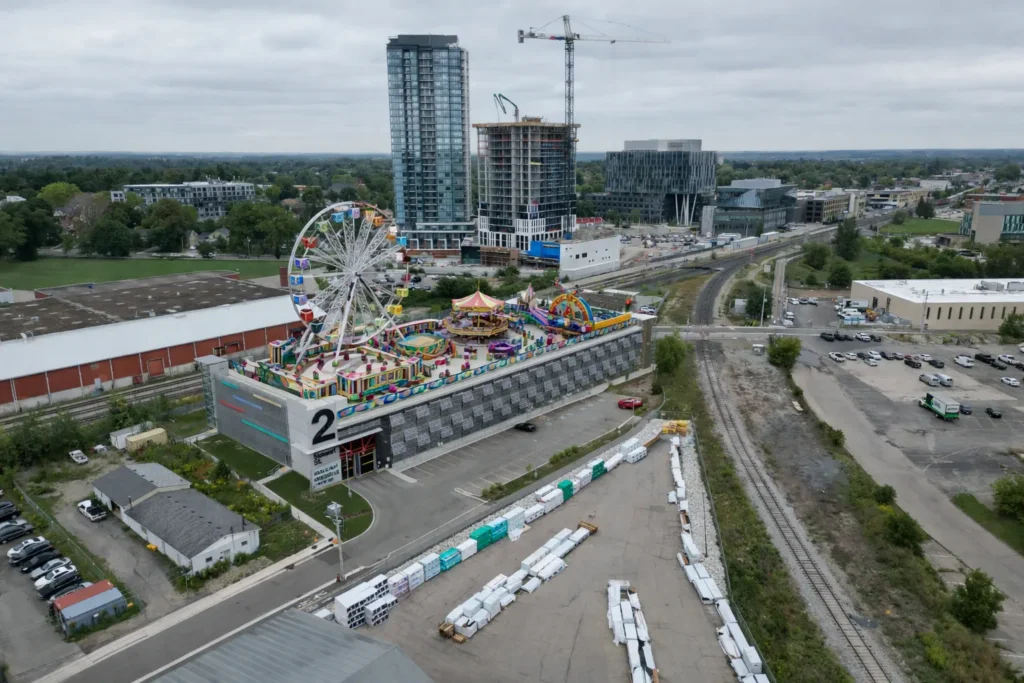
An open air stand alone parkade is relatively simple and cost effective. The moment you put apartments, offices, parks, restaurants, tennis courts or anything else on top, the building code treats the whole thing as a different and much more complex building.
Fire, life safety, structure, and systems all step up.
In practice, the cost per square foot for the entire structure can easily be around double.
If you really want to put another use-type on top of your parking structure read our article “Can you build on top of a parking structure? What Property Owners Need to Know.”
8. Parking structures are not just “normal buildings”
Parking structures are not just short office buildings with cars inside. They are usually deeper than other building types and use longer spans between columns so there is room to park and drive.
Floors have to be sloped for drainage. Water needs to run somewhere, not sit in puddles. On top of that, you have ramps connecting levels, which adds more movement joints, more slope changes, and more places where detailing matters.
Because of this, the way you handle slopes, ramps, drains, joints, and connections is much more important than in a typical building. If you design a parkade like a regular office or retail building, you are likely to run into problems later.

9. Don’t design slopes in two directions
Sloping floors is important for drainage, but try to keep each floor sloping in only one direction.
If you want to use precast double tees or a UHPC deck and beam system, you cannot have the slab sloping both north–south and east–west. You simply cannot prefabricate floor slabs with two different slope directions and have them line up cleanly on site.
With precast and UHPC, you need to pick one main slope direction for each floor and stick with it.
Cast in place concrete can handle slopes in two directions, but it adds complexity to the forming, reinforcing, and detailing. In most cases, a simple one-way slope is easier to build and easier to keep watertight.
10. Keep a consistent structural grid
Parking structures like simple, straight lines. The ideal setup is that your columns run in a clean grid from the foundations all the way to the top level.
If you try to change the column spacing or layout on one floor because you want a different use or a “special” level, the structure gets more complicated very quickly. Transfers, bigger beams, and extra reinforcing all add cost.
In most cases, a consistent grid from bottom to top is cheaper, cleaner, and easier to build.
11. Adding EV chargers is simple. Increasing the electrical service is not (and it’s expensive)
EV chargers themselves are fairly straightforward. You bolt them down, wire them in, and they do their job.
The harder part is everything behind them. EVs can push your electrical demand up a lot, which means bigger electrical service, bigger panels, and often a larger transformer. Those transformers are expensive and can have long lead times, especially at higher sizes.
So planning for EVs is not just picking how many chargers you want. It is also about checking how much power is actually available to the site and what it will cost to bring in more.
12. Don’t run water through your structure in the winter
Try not to run water lines through a parking structure unless you really need them. Any time you have water inside an exposed, cold structure, you are into insulation, heat tracing, and freeze protection.
If you do need water, make sure the lines can be fully drained in winter. Heat tracing and insulating pipes across multiple levels adds cost, adds coordination, and creates more things that can fail over time.
13. Understand your site (zoning and bylaws)
Before you fall in love with a layout, check the zoning and bylaws for your site.
Setbacks, height limits, and lot coverage rules can all change what you are allowed to build. A common trap is an existing surface lot that runs right into the setback area. That is fine for painted lines on asphalt, but you cannot put a structure there.
This means you usually cannot just take your surface lot layout and copy it up two or three levels. With a structure, you need to stay inside the setbacks, and you also have to land columns and foundations in real locations. In practice, the ground level of a new parkade often ends up smaller and shaped differently than the old surface lot, even if you are trying to serve the same site.
14. Ground conditions matter (a lot)
Before you lock in a design, you need to know what you are building on.
Get proper geotechnical work done so you understand the soil profile and the actual bearing capacity. Soft clays, fill, or uneven conditions can push you toward more complex foundations, which can change the cost of the whole project.
Lighter parking structures, like the Kiwi CarPark System, can often sit on simpler foundations such as strip footings, even on weaker soils, because the loads are lower. Heavier structures may need helical piles or deep foundations, which add cost and time.
The structure you choose and the ground you have are linked, so it pays to look at both together.
15. Having an asphalt lot doesn’t automatically save you money
An existing asphalt parking lot feels like a head start, but it usually is not.
You still need real foundations under the new structure. That means cutting the asphalt, excavating, installing footings, and then patching or replacing the surface around them. By the time you do all that, the time and effort is often very close to starting on a blank site.
Existing catch basins and some of the drainage might help a bit. Existing electrical for light poles can sometimes be reused to feed lighting or small loads in the new garage. Those are nice bonuses, but they do not change the fact that the structure itself still needs proper foundations.
16. Yes, parking structures absolutely need foundations
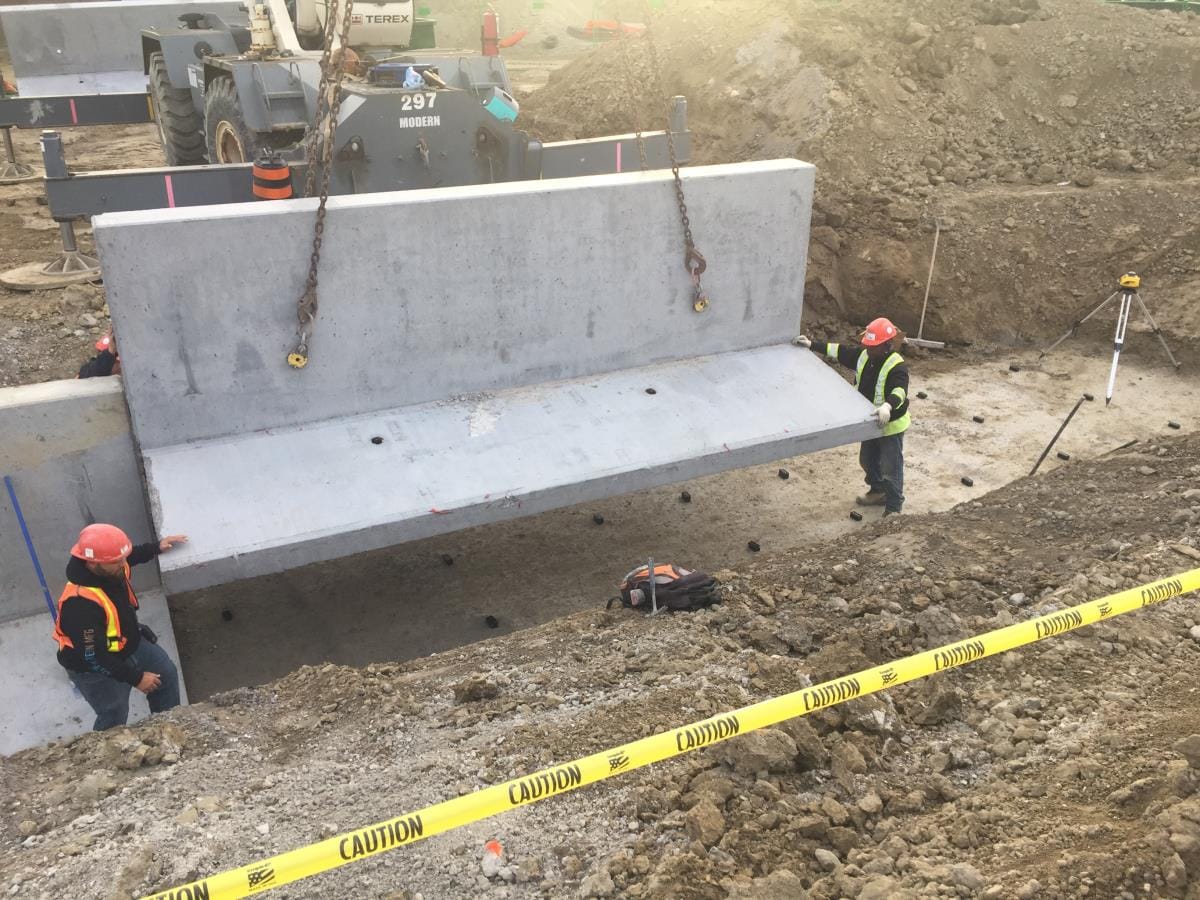
Parking structures require foundations, even if it’s just a one level parking deck. You cannot just “sit” a parking structure on top of asphalt and call it a day.
In North America, parkades are treated as real buildings. They carry significant loads and have to meet building code, which means proper foundations sized for the soil conditions and the structural system.
This is also why truly “temporary” parking structures are not common here. If you are curious about that topic, you can read more in our article on temporary parking structures in North America.
17. Building right up against other buildings can be tricky
Even if your property has a “zero lot line,” you cannot just push a parking structure tight against your neighbour’s wall and call it done.
You still need proper fire separation between the two buildings. If the neighbouring building has a lot of windows facing your site, that can trigger extra requirements for fire ratings, setbacks, or special construction details.
All of this can affect how close you can build, how tall you can go, and what your façade needs to be on that side. It is worth checking these constraints early, before you assume you can use every inch of the property line.
18. Make the flow inside intuitive
A good parking structure should feel simple to use. You drive in, follow a clear path, and spots appear along the way.
A two bay sloped floor layout works very well for this. You pass every stall as you move up or down through the structure. You just keep driving until you see an open space, then you park. No hunting, no guesswork, and no awkward loops to find your way back out.

19. Technology will not fix a bad layout
Parking technology is helpful, but it is not magic. Apps, counters, signs, and fancy guidance systems are nice to have, but they cannot rescue a confusing or inefficient layout.
Get the geometry and flow right first, then use technology to make a good structure even easier to use.
20. Remember the operational costs
It is easy to focus on what it costs to build and forget what it will cost to operate and maintain.
A simple roof can cut down on snow removal costs and provides everyone the same quality of covered parking. The top of a parking structure is also a great place for solar. Most other buildings have mechanical units and stacks on the roof that cast shadows.
Parkades do not. You can often fit a lot of solar panels above the top deck, and the structure itself does not use much power, so that energy can help feed other buildings on your site. If you want to explore this idea further, you can look at our solar power systems page.
Material choice also shows up in the operating budget. High quality materials like Ultra High Performance Concrete (UHPC) instead of regular concrete can dramatically reduce maintenance needs. UHPC can cut operational maintenance by up to 90 percent by removing the need to have epoxy toppings that need to be stripped and replaced every few years.
21. Angle parking takes up more space
Angled stalls can be nice to use, but they are not very space efficient in a structure.
To make angled parking work, the bay has to be deeper, and the drive aisle is often wider too. Each stall “sticks out” further into the aisle because of the angle. Over a whole parkade, that means fewer stalls for the same footprint, or a bigger building to fit the same number of cars. Either way, it adds cost.
22. Accessibility is important, design intentionally
Try to avoid unnecessary curbs throughout the structure. Curbs can trip people up and make it harder to move with strollers, wheelchairs, or carts. Bollards often do the same protection job without getting in the way.
Keeping accessible stalls on the ground level is usually a good idea. It gives people a simple, flat path from their vehicle to the entrance.
Done well, this can help you meet accessibility needs without having to add an elevator to a basic structure.
23. Think about future proofing
If there is even a chance you will want more parking in the future, plan for it now.
If you might add levels later, you need to know that up front so the foundations and columns can be sized for that future load. It is very hard and very expensive to upgrade the structure after the fact.
You can also plan for horizontal expansion. Think about where future ramps, stairs, and elevators could go, and make sure the current layout would still work if you extend the footprint. A little planning early on can save a lot of money and headaches later.
24. Project delivery matters. Use Design-Build. Please don’t use DBFOM!
How you buy the project is almost as important as what you build.
Parking structures are a great fit for design-build and modular systems. When the design and construction teams work together from the start, you can tune the layout, structure, and schedule as one package instead of trying to bolt a system onto a finished set of drawings.
For owners, it helps to focus on requirements, not recipes. Set clear goals for capacity, durability, open air classification, schedule, and budget, and make sure the structure has to meet all applicable building codes.
You do not need to prescribe every beam, joint, and connection in the tender. Let experienced parking structure teams propose the best system to meet your needs.
Does DBFOM (Design-Build-Finance-Operate-Maintain) work? Short answer, no.
We see public entities try to bundle everything into DBFOM or “Design-Build-Operate” RFPs. These almost never go the way people hope. They are complex, hard to price, and often get cancelled or re issued as straight Design-Build with a separate operator and financing plan.
Too often, DBFOM is used as a way to “see what the market can do” rather than as a serious, well thought through procurement. That is incredibly frustrating for the teams who submit compliant bids. These RFPs can cost tens or even hundreds of thousands of dollars just to participate in, and cancelling them because the owner did not do their homework is, in our view, an unethical way to procure work.
Design and Build belong together. Finance is independent, and Operations and Maintenance belong together. There is no good reason to tie the operator to the design-builder, and you risk ending up with a great builder but the wrong operator for your project (or vice-versa). We have never seen a DBFOM for a stand alone parking structure actually go through to contract. Parking structures are not big money makers on their own (with rare exceptions). They usually support other uses that generate income, which makes them a poor fit for complex DBFOM style financing models.
So please! Do not issue DBFOM (DBF, DBO, DBOM, or any other combination other than DB) RFPs for parking structures.
25. “Temporary” parking structures do not really exist, but demountable structures do
When people say “temporary parking structure,” they often picture something light that can be dropped on an asphalt lot for a short period and then moved again with very little effort.
In North America, it does not really work that way. Parking decks are treated as buildings, not tents. They still have to meet local parking dimensions, building codes, and safety standards, and in most cases they need proper foundations.
What you can have are demountable or relocatable systems. These are fully engineered structures that can be taken apart and moved, but they are still real buildings while they are in place.
If you were looking for a temporary parking garage, you may want to read “Temporary Parking Structures in North America” to learn more about the challenges with temporary structures in North America.
26. Elevators are not required by code
Many people assume every parking structure needs an elevator. Code does not always require one.
Elevators are nice to have, but they add capital cost and ongoing maintenance. If you keep accessible stalls on the ground floor, and plan clear, simple walking routes, you can often meet basic code and accessibility needs without installing an elevator in a simple stand alone parkade.

27. Fire alarm, sprinklers, and standpipes are not always required
For open air parking structures, fire protection requirements are quite different from enclosed garages.
In an open air structure, fire alarms and sprinklers are not required. If the building is taller than about 15 metres, you will need a standpipe system, but you still do not need a full fire alarm or sprinkler system.
Once you enclose the structure or combine parking with other uses in the same building, the rules change and more fire protection systems come into play.
28. Large projects can be phased
On large projects, phasing can make a lot of sense, but how you phase it matters.
Phasing means that you can commission and open up part of the structure while construction continues on another section or phase of the structure.
It is usually better to finish and open whole sections of the footprint, from ground to top, rather than opening half finished levels across the whole structure. You do not want people parking underneath active construction.
Building and opening the parkade in clean phases keeps users safer, makes wayfinding simpler, and is easier to manage from a construction and safety point of view.
29. Parking structures do not like quirky shapes
Not all square footage is equal. In housing or office buildings, you can often still utilize odd corners or angles inside unit layouts. With parking, you do not have that flexibility. The layout of stalls and drive aisles has to work cleanly, or the building simply does not park well.
When you force a quirky shape onto a parking structure, you usually end up with fewer stalls, more ramps, strange dead zones, and worse efficiency overall. Function and form are tightly linked here. If the function does not work, the extra square footage is just expensive empty space.
The image below shows some optimal layouts. Note that they do not have any curves or angles. Curves, angles, or dimensions that do not align with a standard width of a bay will end up wasting square footage.
30. Don’t over complicate it
Parking structures are simple at heart. If you get the basics right like layout, structure, site conditions, and future needs, the parkade will quietly do its job for decades.
Simple, robust, and well planned almost always beats something that is overdesigned and hard to build.
When you are building a parking structure, it is very easy to get pulled into renderings, façade ideas, or pressure to move fast. This list is meant to slow you down just enough to avoid the big, expensive mistakes. If you get the basics right early on, a parkade can be simple, reliable, and surprisingly low maintenance for decades.
If you are looking at a specific site or project and want a second set of eyes, Kiwi Newton can help you work through layout, open air classification, foundations, and whether the Kiwi CarPark System is a good fit. You can start the conversation through our contact page or learn more about our parking structure construction work.