
Article Quick Summary
A public owner can define a parking structure in considerable detail without deciding the construction solution before procurement. Capacity, site conditions, traffic, accessibility, durability, operations, schedule and other performance requirements can be established while qualified teams retain room to propose different compliant solutions.
That distinction matters because early procurement decisions can narrow the market long before a construction tender is issued. The professional-services category, the delivery model, the amount of project-specific design demanded from proponents and the timing of builder involvement can all affect which solutions are still able to compete.
Design-Build and Progressive Design-Build (PDB) are not the only valid ways to procure parking infrastructure. They are, however, established ways to involve design and construction expertise before the solution is fixed. A properly structured process can remain open, competitive and transparent while giving the owner stage gates, cost updates and an off-ramp before construction.
Why the Procurement Starting Point Matters
One of the earliest decisions a public owner makes on a parking structure can quietly determine much of what happens afterward.
Who gets hired first?
In a traditional process, an owner may retain an architectural or engineering consultant. That consultant begins developing the parking structure, establishes the layout, advances the design, makes structural and material assumptions, and eventually produces documents that contractors can price.
There is nothing inherently wrong with that approach. For some projects, completing the design before procuring construction may be exactly what the owner wants.
But it is not the only way to procure a parking structure. If the delivery model has not yet been deliberately chosen, the first consultant appointment can begin narrowing the available solutions before the market has actually been asked how it would solve the owner’s problem.
What does the owner need the parking structure to accomplish, and which requirements genuinely need to be fixed before procurement begins?
The Organisation for Economic Co-operation and Development (OECD) recommends functional specifications that focus on what is to be achieved rather than how it is to be done. For parking structures, that principle can preserve competition over the solution while still allowing the owner to be very specific about the required outcome.
A Parking Structure Is a Long-Term Infrastructure Asset
A public parking structure may operate for decades. It must safely accommodate vehicles and pedestrians, withstand weather and environmental exposure, manage water and drainage, meet accessibility and life-safety requirements, integrate with surrounding roads and facilities, and remain maintainable throughout its service life.
The initial construction price matters, but it is only one component of value. Durability, service life, maintenance requirements, operating performance, schedule, future flexibility and construction risk can all materially affect the owner over the life of the structure.
For Canadian projects, durability criteria also deserve attention early in procurement. Our overview of Canadian Standards Association (CSA) S413 for Parking Structures explains the parking-structure-specific durability standard commonly considered in Canada.
That is why parking structure procurement should be considered as an infrastructure decision, not simply a competition to obtain the lowest early construction number. Owners looking at the broader planning process can also review How to Build a Parking Structure: A Complete Step-by-Step Guide.

Define the Problem Thoroughly Without Designing the Answer
Outcome-based procurement does not mean giving proponents an undefined project.
The owner should do substantial work before going to market. For a parking structure, that can include:
- required parking capacity and operating objectives;
- site and property limits;
- survey and geotechnical information;
- known utilities and site constraints;
- zoning, height and planning restrictions;
- vehicle access and traffic assumptions;
- pedestrian circulation and accessibility requirements;
- required clearances and loading requirements;
- security and lighting performance;
- drainage requirements;
- electric vehicle (EV) charging requirements;
- service-life and durability expectations;
- maintenance expectations;
- architectural or community objectives;
- construction phasing or operational restrictions; and
- target completion date and budget context.
Those are meaningful project requirements. What does not necessarily need to be predetermined is the structural material, proprietary building system, structural grid, ramp arrangement, fabrication method or detailed construction solution.
The distinction is simple: define the infrastructure problem and the owner’s non-negotiable requirements clearly, without fixing more of the answer than the project actually requires.
The First Procurement Can Narrow Every Procurement That Follows
Consider a simplified conventional sequence:
Parking need identified → consultant retained → concept developed → structural and architectural decisions made → drawings advanced → construction tender issued
The eventual construction tender may be completely competitive. But by the time it is issued, much of the original solution space may already be gone.
The building geometry may have been established. Structural depths and grids may be fixed. Ramp arrangements may be determined. Materials may be specified. Construction sequencing may already be implicit in the design.
An alternative structural system may technically still be permitted, but participating could require a contractor or supplier to redesign a substantial portion of the project. In practical terms, the contractors may now be competing primarily over the cost of constructing a solution developed before they arrived.
That is not automatically a problem. It is a risk allocation choice. The important question is whether the owner chose that delivery model intentionally, or whether an early professional-services procurement chose it by default.
Keep the Qualified Market Open
A Stand-Alone Parking Structure Does Not Automatically Require an Architect in Ontario
This issue is particularly relevant in Ontario because a stand-alone parking structure is not automatically a project that must be architect-led.
Ontario building regulations address storage garages within the Group F, Division 3 framework. Under the Architects Act, an architect or a professional engineer may prepare or provide the design of a building exceeding 600 square metres or three storeys when it is used or intended for industrial occupancy, subject to the professional responsibilities established by the legislation. Only a professional engineer may provide services that constitute the practice of professional engineering in connection with that design.
Project-specific conditions still matter. Mixed occupancies, occupied uses within or above a garage, and the actual professional scope can change the requirements. The point is not that architects have no role in parking projects.
Architects can provide substantial value, particularly where façade design, public realm integration, mixed uses, wayfinding, architectural expression or complex building interfaces are important.
The procurement question is narrower:
If an architect is not required to be the only possible lead designer for the project, should an architectural-services procurement automatically be the only doorway into the project?
An Architect-Only Call Can Exclude Other Qualified Delivery Configurations
Imagine that a public owner identifies the need for a stand-alone parking structure and the first procurement opportunity is issued only to architectural practices, perhaps through an existing architectural Vendor of Record arrangement.
The competition among those architects may itself be fair. But that is not quite the same question as whether the original project opportunity was open to the full qualified market.
Potentially qualified professional-engineering firms, parking specialists, contractor-led Design-Build teams and integrated Design-Build organizations may never have had an opportunity to compete for the original problem. By the time construction procurement occurs, the project may have advanced far enough that those alternative configurations can no longer meaningfully influence the solution.
Ontario’s current Broader Public Sector (BPS) Procurement Directive says publicly funded construction and consulting services should be acquired through a process that is open, fair and transparent. It also makes organizations accountable for the results of their procurement decisions and the appropriateness of the processes used.
That does not establish that every architect-only procurement is inappropriate. There may be a legitimate project-specific reason to require an architect-led team.
But where the project can lawfully and practically be delivered through other professional configurations, the restriction should have a reason. A useful procurement question is:
What owner requirement makes this professional configuration necessary?
Fair Competition Starts Before the Construction Tender
It is easy to think about competition only when construction bids are submitted. By then, however, some of the most consequential competitive decisions may already have occurred.
Who was allowed to participate when the project was first defined? Was a particular professional configuration genuinely required? Were the requirements described in functional terms? Could different structural systems compete? Could engineering-led and integrated Design-Build teams participate?
Open, fair and transparent procurement is therefore worth considering across the entire procurement path, not only within the final construction tender.
Select Capability Without Asking Proponents to Give Away the Design
There is another important distinction in professional-services and Design-Build procurement: selecting the team is not the same thing as selecting a finished design.
Selecting a Team Is Different From Selecting a Design
An owner understandably wants proponents to demonstrate that they understand the project and are capable of delivering it. That does not necessarily require every proponent to substantially perform the project design before one of them has been retained.
There is a point where demonstrating qualifications becomes providing project-specific professional services.
Ontario’s architectural rules make this distinction unusually clear. Under Regulation 27 under the Architects Act, professional misconduct includes providing competing architectural services for an Ontario building project without a fee, except in an open competition conducted in accordance with the regulation. It also addresses limited competitions where participating architects are not equally remunerated.
What the Ontario Association of Architects Says Can Be Demonstrated Before Retention
The Ontario Association of Architects (OAA) Regulatory Notice draws an especially useful line between qualifications and speculative professional work.
It says an architectural practice can demonstrate its “experience, capabilities, resources, and capacity”. But before being retained, it should not provide “solutions, suggestions, ideas, or evidence of same” that have value to the client or upon which the client might be expected to rely.
“Speculative services to lure or entice a client, or ‘loss leaders,’ are not permitted.”
That distinction is highly relevant to procurement. A proposal can show that a team has solved comparable problems, understands the risks, has the right people and has a credible process. It does not automatically need to give the owner the project-specific solution before the team is retained.
When Does a Request for Proposals Become a Design Competition?
There is no universal line separating a strong technical proposal from a design competition.
An owner can reasonably ask proponents to explain their technical approach, identify relevant risks, discuss comparable projects, describe potential areas for value engineering and explain how important design decisions would be investigated.
The question becomes different when proponents are asked to produce substantially developed layouts, plans, elevations, renderings, calculations, structural concepts or other project-specific professional work that the owner can rely upon after the competition.
At that point, the procurement begins to look less like a competition to select a professional team and more like a competition to select among competing designs.
If that is what the owner actually wants, a design competition can be a legitimate procurement method. The effort should simply be recognized for what it is. Compensation or stipends, intellectual property, the number of competitors and the level of requested design development should all be considered accordingly.
The Royal Architectural Institute of Canada (RAIC) recommends that all competitors in an invited architectural competition receive payment, with compensation reflecting the level of professional services required in the submission.
What Can an Owner Evaluate Without a Finished Design?
Quite a lot. For a parking structure, a qualifications-focused procurement can evaluate:
- comparable parking-structure experience and past performance;
- the experience and accountability of the proposed Project Executive;
- original and final costs on comparable projects;
- planned and actual schedules;
- durability and service-life experience;
- the team’s approach to design development and owner collaboration;
- value-engineering opportunities that should be investigated;
- understanding of major project risks and uncertainties;
- construction and prefabrication experience;
- current cost benchmarks and a credible order-of-magnitude cost range; and
- references from owners of completed projects.
The owner can also ask teams to identify areas that should be tested during design, such as structural efficiency, circulation, prefabrication, façade strategy, future expansion, maintenance access or construction sequencing. That demonstrates how the team thinks without requiring it to finish the design as part of the competition.
Design-Build Can Preserve Competition Without Turning Procurement Into a Design Giveaway
This distinction should not be interpreted as an argument against Design-Build. Established Design-Build procurement practice shows that an owner can evaluate an integrated designer-constructor team without requiring every competing team to substantially design the project for free.
Two-Phase Design-Build Provides a Useful Public-Sector Precedent
U.S. federal procurement rules provide a clear example. Under the Federal Acquisition Regulation (FAR) two-phase Design-Build procedure, Phase One evaluates the team’s technical approach, specialized experience, technical competence, capability and past performance, including the architect-engineer and construction members.
But Phase One expressly evaluates technical approach without detailed design or technical information. Only the most highly qualified teams proceed to Phase Two.
This is an important precedent because it separates two questions:
- Which teams are qualified to solve the problem?
- What design and commercial proposal should be developed after the field has been narrowed?
Design-Build does not require an owner to ask the entire market to design the project simply to prove that they are capable of designing it.
Progressive Design-Build Moves Detailed Design Into the Paid Project Phase
Progressive Design-Build takes the qualifications-first approach further.
The owner selects an integrated Design-Builder early, commonly before substantial project-specific design has been completed. During Phase 1, the selected team works with the owner to develop and compare viable solutions, refine scope, investigate risks, update the schedule and progressively develop cost.
There is a practical difference in where the professional effort goes.
Instead of several competing teams each spending substantial time developing one partial design that may never be used, the selected team can spend that professional effort evaluating multiple alternatives for the owner.
The design work still happens. It happens under contract, with the owner participating in the decisions and the architects, engineers, constructors and specialists able to work together.
The Builder Can Be Involved Without Giving Up Owner Control
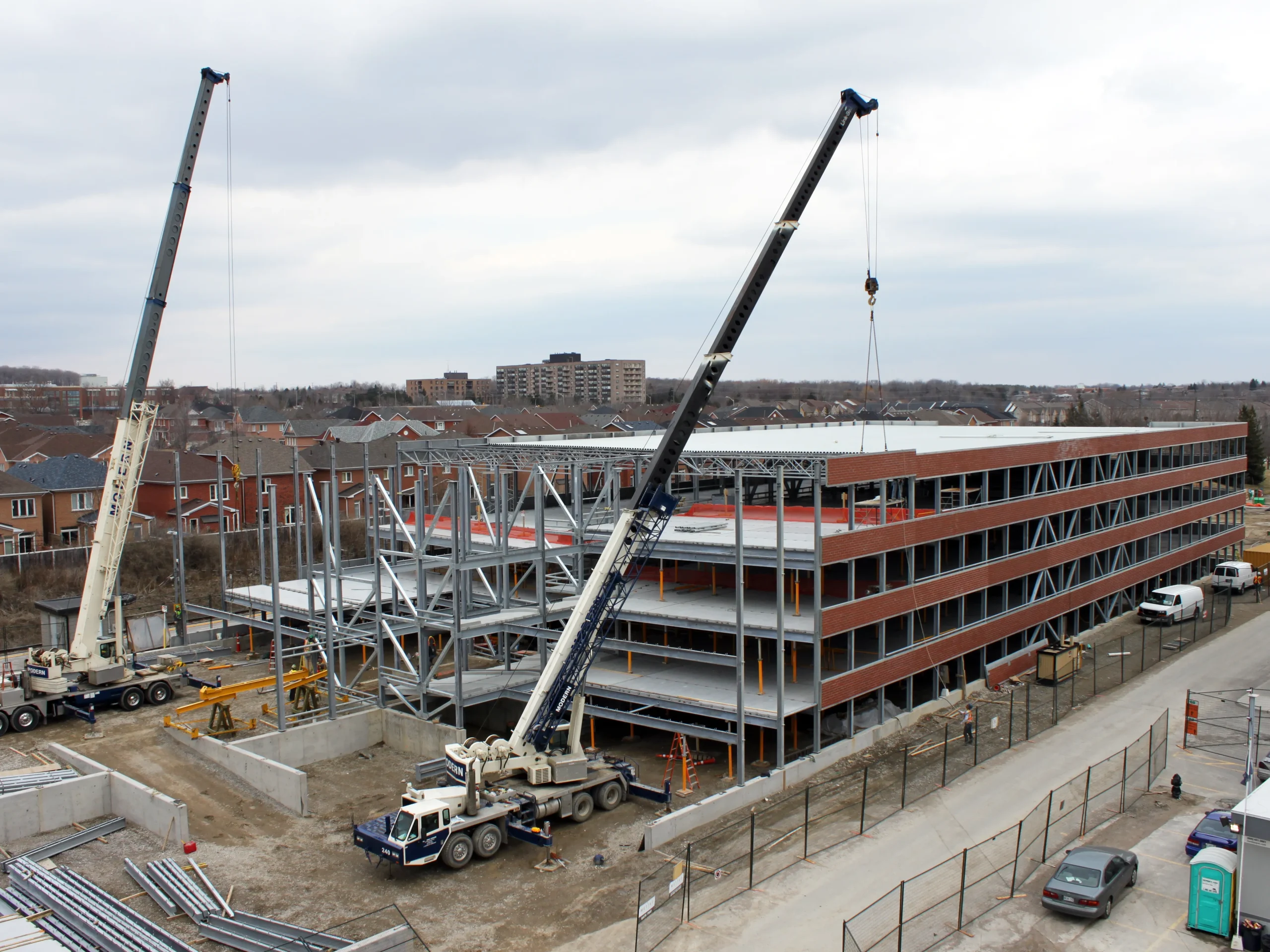
Bringing the builder into the project early does not mean the owner gives up control of the outcome.
What changes
The organization responsible for construction is present while major design decisions are still flexible. Constructability, sequencing, logistics, current market information and cost feedback can influence the solution before those decisions become expensive to change.
What does not change
The owner still defines the performance requirements, provides the common project baseline, establishes the evaluation criteria and approves major project decisions. Licensed professionals remain responsible for their professional work.
The defining difference is that design and construction knowledge are integrated earlier rather than connected through a late handoff. For a broader comparison of delivery models, see Public Procurement for Construction Projects: What Is the Best Project Delivery Model?
How a Qualifications-Led Process Can Manage Owner Risk
A common concern with Progressive Design-Build is that the final construction price is generally not fixed on the day the Design-Builder is selected.
That is a real difference from a fixed-price construction tender. It is not the same as giving up cost control.
Progressive Commitment and Stage Gates
A well-structured PDB process can separate the commitment to develop the project from the commitment to construct it.
Phase 1 can be authorized first. The owner and Design-Builder then progressively validate the requirements, compare design alternatives, update the schedule, refine the cost and resolve important risks.
Formal stage gates can require owner approval before the project advances. A typical sequence can include project validation, preferred concept, design development and then a separate Phase 2 construction authorization.
This is better understood as progressive commitment. The owner commits more as the information improves.
Comparable Projects Can Provide Early Cost Evidence
Qualifications-led procurement does not mean ignoring price.
The owner can require proponents to provide evidence from comparable completed parking structures, including project size, number of stalls, original contract value, final cost, planned schedule, actual schedule, major changes and an explanation of what a comparable project would cost in current dollars.
The proponent can then use that evidence to support a non-binding order-of-magnitude range for the owner’s project. The evaluation question is not simply which team states the lowest early number. It is whether the number is realistic, traceable and supported by actual experience.
For more on the variables that affect parking budgets, see How Much Does It Cost to Build a Parking Structure?
The Off-Ramp Protects the Construction Decision
Selection of a PDB team does not have to mean automatic commitment to the full construction cost.
The Federal Highway Administration (FHWA) guidance on Progressive Design-Build identifies an owner off-ramp if acceptable Phase 2 terms cannot be reached.
The agreement should establish what happens to completed Phase 1 work, project information and handover requirements if the owner elects not to proceed with the Design-Builder into construction.
This does not eliminate project risk. It changes when decisions are made and what information the owner has when making them.
A fully designed tender can provide competitive construction pricing after design is complete, but it carries the risk that important constructability, system and value decisions were made before the constructor became involved. PDB develops final construction pricing later, but creates an opportunity for those construction considerations to influence the project while the design is still flexible.
Prequalification Can Reduce Effort Without Closing the Market Too Early
Owners also do not need every interested organization to prepare an extensive proposal.
A proportionate Request for Qualifications (RFQ) can evaluate baseline capability, relevant parking experience, past performance and project leadership. If the market is large, the owner can shortlist a manageable number of qualified teams for the next stage.
The important point is that qualification criteria should be related to what is actually necessary to deliver the project. Prequalification should identify capable competition, not unnecessarily predetermine the design solution or professional configuration.
Choose the Delivery Model Intentionally
There is no single procurement model that is appropriate for every parking structure.
For some projects, a traditional consultant-led design followed by a construction tender may be appropriate. For others, a two-phase Design-Build competition may provide the right balance of team selection, design development and competitive pricing. Where an owner wants to select the integrated team earlier and progressively refine design, cost, schedule and risk before committing to construction, Progressive Design-Build provides another established option.
The important issue is not that every owner should use PDB.
It is that the delivery model should be chosen intentionally before earlier procurement decisions quietly choose it instead.
Start with the need. Define the owner’s requirements and site realities. Keep unnecessary restrictions out of the competition. Decide what evidence is actually needed to select a capable team. Then choose the delivery model that best manages the project’s particular risks.
To learn more about Kiwi Newton’s parking structure capabilities, visit our Parking Structures page or read our Design-Build Construction overview.